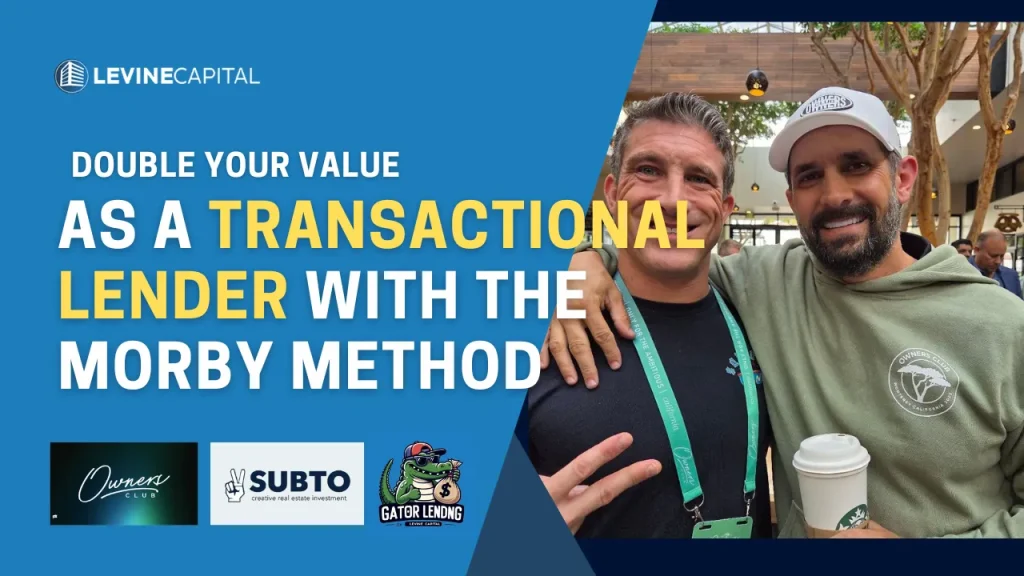
Closed & Funded Case Study
A real estate investor recently closed a $132,000 DSCR purchase loan at 80% loan-to-value in Baytown, Texas. The transaction was presented as a Morby Method deal, bringing together property-income underwriting and a creative acquisition strategy.
This case study explains what the verified closing details tell us, what they do not tell us, and how investors can prepare a similar scenario for a fast, useful pre-screen with Levine Capital.
The closing is the proof point: creative-finance transactions can move from an idea to a funded loan when the first mortgage, property economics, documentation, and closing structure are aligned early.
What Closed in Baytown
The public closing announcement confirms four material facts: the property is in Baytown, Texas; the funded loan amount was $132,000; the reported leverage was 80% LTV; and the financing was a DSCR purchase associated with the Morby Method.
The borrower’s name, street address, interest rate, rent, appraisal, seller terms, cash contribution, and subordinate financing details are intentionally not published here. Protecting client and property information matters, and none of those facts should be inferred from a social-media closing graphic.
What an 80% LTV DSCR Purchase Means
Loan-to-value compares the first-mortgage balance with the value used by the lender. On a purchase, that value is commonly tied to the lower of the purchase price or appraised value, subject to the applicable program and underwriting decision.
If the reported $132,000 first mortgage represents exactly 80% of the lender’s value basis, the implied base is $165,000:
| Calculation | Amount | What it indicates |
|---|---|---|
| First mortgage | $132,000 | The verified funded loan amount |
| Implied value basis | $165,000 | $132,000 ÷ 0.80 |
| Difference | $33,000 | The gap between the implied base and first mortgage, before closing costs or other adjustments |
That arithmetic explains the leverage; it does not identify the source of the remaining capital. Depending on the transaction, the difference may be covered by borrower cash, documented seller financing, transactional capital, another approved source, or a combination. Every source must be disclosed and approved before closing.
How the Morby Method Can Fit a DSCR Purchase
The Morby Method—also called the Stack Method by many investors—focuses on coordinating more than one capital source around a real estate acquisition. A DSCR loan can serve as the first mortgage because qualification centers heavily on the property’s rental-income performance rather than conventional personal-income calculations.
A properly structured transaction may include:
- A DSCR first mortgage sized to the property, rent, expenses, borrower profile, and program limits
- Borrower equity or another eligible and documented source of funds
- A seller-held second mortgage when the senior lender permits it
- Transactional or gap capital when approved for the specific deal
- A title and closing plan that clearly shows every lien, payment obligation, and source of funds
The Baytown announcement identifies the closing as a Morby Method transaction, but it does not disclose the exact subordinate layer. That distinction is important: the Morby Method is a structuring framework, not a promise that every deal uses the same stack.
For a deeper explanation, review Levine Capital’s Morby Method resource page and its guide to pre-screening DSCR and Morby Method deals.
Why Early Pre-Screening Matters
Creative finance becomes difficult when the lender sees only one piece of the capital stack. A borrower may focus on the first-mortgage amount while the lender also needs to understand subordinate debt, seller payments, maturity dates, reserves, closing costs, and the exit strategy.
A useful pre-screen should answer five questions early:
- Does the property fit? Confirm property type, occupancy, condition, marketability, and whether the intended use is eligible.
- Does the rent support the debt? Estimate the qualifying rent and compare it with principal, interest, taxes, insurance, and association dues where applicable.
- Is the capital stack permitted? Disclose borrower cash, seller financing, private capital, credits, and every other source.
- Can the closing be documented? Title, lender, attorneys, and closing agents need a consistent understanding of liens and funds.
- Does the exit remain realistic? The investor should underwrite ongoing cash flow, reserves, refinance risk, maturity dates, and possible changes in rates or expenses.
This is why Levine Capital encourages investors to request a pre-screen before making nonrefundable deposits or committing to a structure. The fastest closing process usually starts with complete information, not just a property address.
What a Lender Reviews on a DSCR Purchase
A DSCR loan is not simply “approved because rent exists.” The lender evaluates whether the property and borrower satisfy the applicable program, and whether the transaction can withstand normal operating costs and debt service.
| Review area | Examples | Why it matters |
|---|---|---|
| Property income | Lease rent, market-rent schedule, occupancy | Supports the debt-service calculation |
| Housing expense | Principal, interest, taxes, insurance, HOA | Establishes the recurring payment burden |
| Value and basis | Purchase price, appraisal, concessions | Determines the lender’s LTV base |
| Borrower profile | Credit, experience, liquidity, entity documents | Supports capacity and execution |
| Capital stack | Equity, seller note, private capital, credits | Confirms leverage, lien priority, and funds to close |
| Exit strategy | Long-term hold, refinance, sale | Tests whether the structure remains sustainable |
Levine Capital’s long-term rental loan page explains the DSCR program at a high level. Final leverage, pricing, reserves, documentation, and eligibility are determined only after full underwriting.
Why Baytown Is Part of the Houston-Area Investor Conversation
Baytown sits on the Texas Gulf Coast within driving distance of Houston. The City of Baytown’s economic-development office describes the community as being in “Houston’s backyard” with access to regional highways and Gulf Coast employment centers.
That location can attract rental-property interest, but geography alone does not make a deal financeable. Investors still need property-specific rent support, taxes, insurance, condition, title, and a realistic operating budget. Coastal and Gulf-region properties can also require careful insurance review. A conservative analysis should include the actual quote rather than an estimate copied from another property.
Investor Checklist for a Similar Deal
To obtain a meaningful initial review, assemble the following before submitting:
- Property address and purchase contract or proposed price
- Requested loan amount and target closing date
- Current lease or realistic market-rent evidence
- Estimated taxes, insurance, and HOA dues
- Borrower credit range, experience, liquidity, and entity status
- Every source of funds, including any seller-held note or private capital
- Seller-note terms, if proposed: amount, interest, payment, maturity, and lien position
- Property condition, repair needs, and any immediate capital expenditures
- Plan for holding, refinancing, or selling the property
Do not describe seller financing as “equity” or omit a private advance. Hidden debt can change combined leverage, debt service, title priority, and eligibility. A clean capital stack is a disclosed capital stack.
Investors can also use MorbyMethod.ai to explore creative-finance concepts and scenario tools before submitting the actual transaction for underwriting.
Frequently Asked Questions
What does 80% LTV mean on a DSCR purchase?
It means the reported first-mortgage amount equals 80% of the value basis used by the lender. Actual sizing depends on the program, purchase price, appraisal, rent, expenses, borrower profile, and underwriting.
Does every Morby Method deal include seller financing?
No. Morby Method transactions can use different combinations of first-mortgage debt, borrower equity, seller financing, and approved private or transactional capital. The complete stack must be disclosed and permitted.
Can a DSCR loan qualify without tax returns?
DSCR programs generally focus on property income rather than conventional personal-income qualification. Borrowers must still satisfy credit, liquidity, entity, property, documentation, and other program requirements.
Can Levine Capital review another Baytown or Texas deal?
Yes. Submit the property, rent, purchase terms, requested loan amount, borrower profile, and proposed capital stack through the secure Quick Quote. Every scenario is reviewed individually.
Sources and Further Reading
- Levine Capital — Why Pre-Screening Is the Foundation of Every Successful Morby Method & DSCR Deal
- Levine Capital — Morby Method and Creative-Finance Resources
- City of Baytown — Baytown: A Place to Grow
Compliance disclaimer: This material is for general educational purposes only and is not legal, tax, investment, or lending advice. Program availability and guidelines can change. All financing is subject to complete underwriting, documentation, title review, property eligibility, appraisal, lender approval, and applicable law. Nothing in this article is a commitment to lend. Morby Method, Stack Method, SubTo, Owners Club, and other community or educational references do not imply endorsement or guaranteed qualification.