The Cost of Treating Capital Like a Commodity
Most real estate investors treat financing as a purely transactional hurdle. They find a property, shop around for a rate, sign the first term sheet that looks acceptable, and hope the deal makes it to the closing table. It is a strategy that works perfectly right up until it does not — until the appraisal comes back light, the property sits in a rural census tract no lender wants to touch, a seasoning requirement blocks the refinance, or the seller demands a two-week close.
When financing is just a transaction, every obstacle is a dead end.
One of our VIP clients took a different approach. He is an active value-add investor in Illinois, and over roughly eleven months, he has closed twenty-one loans with Levine Capital, totaling approximately $2.53 million. His portfolio did not scale because he found a single cheap rate. It scaled because every single time he brought us a scenario, we had the strategic depth and capital access to place it.
That is the profound difference between a transactional lender and a capital markets partner.
What Twenty-One Closings Actually Looks Like
The sheer volume of closings is impressive, but the pattern is what reveals the power of the partnership.
This client did not simply close twenty-one identical loans. His pipeline included Fix & Flip acquisitions, DSCR purchases, DSCR cash-out refinances, and a portfolio loan consolidating multiple properties. These deals were routed across multiple capital sources, deliberately chosen based on which provider priced and underwrote each specific scenario best.
Most importantly, he ran the same properties through our platform twice.
The Full Cycle, Documented Four Separate Times
| Property | Step One (Acquisition & Rehab) | Step Two (Stabilization & Refinance) | Result |
|---|---|---|---|
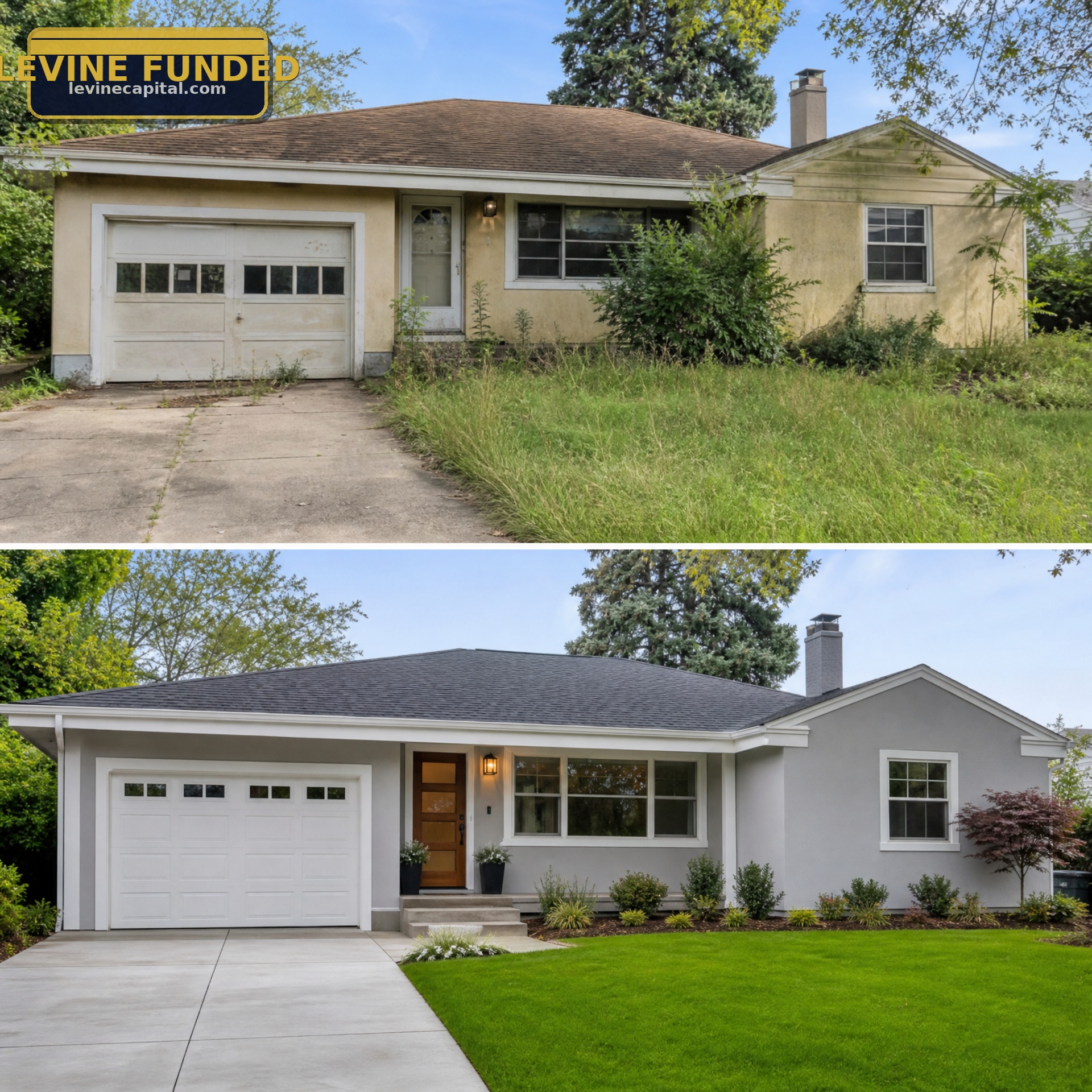
| 855 East Acton Ave | Fix & Flip — $75,000 (Closed in 15 days) | DSCR Cash-Out — $104,800 (~3.5 months later) | Bought, rehabbed, capital pulled back out |
| 627 S 19th St | Fix & Flip — $62,000 | DSCR Cash-Out — $90,000 | Cycle repeated successfully |
| 320 W Cleveland Ave | Fix & Flip — $97,200 | DSCR Cash-Out — $144,000 | Cycle repeated successfully |
| 114 N Missouri Ave | Fix & Flip — $92,400 | DSCR Cash-Out — $138,750 | Cycle repeated successfully |
Four complete buy-rehab-refinance loops, all financed seamlessly under one relationship. This is not merely a testimonial; it is a documented, repeatable system. It is the exact reason his capital keeps recycling into the next acquisition instead of sitting trapped in a finished project.
Sizing to the Deal, Not the Formula
| Deal | Leverage | What It Demonstrates |
|---|---|---|
| 1006 N 2nd St | 90% LTC | Maximum leverage applied when the deal metrics supported it. |
| 435 N 38th St | 90% LTV | Aggressive valuation recognition where the property earned it. |
| 7253 Town Hall Rd | 89.47% LTC | Near-maximum leverage for high-potential assets. |
| 135 W Juda Ave | 55.5% LTC | We sized down rather than forcing a deal that did not work at higher leverage. |
| 2304 Grand Ave | 58.32% LTC | Conservative basis established, and priced accordingly. |
A lender who only knows how to say “90%” is not protecting your interests. Neither is one who only knows how to say “65%.” The right lending partner tells you what the deal actually supports — and is honest when the answer requires a more conservative approach.
Why We Can Say Yes: Internal Capital Meets Wholesale Reach
Here is the structural advantage most borrowers never see.
Levine Capital deploys our own internal capital on deals where speed and certainty matter most. When we are the direct capital source, there is no third-party committee to wait on. We control the underwriting, we dictate the timeline, and we can close as fast as the title work allows. That internal capability is precisely how a Fix & Flip acquisition like 855 East Acton Avenue closed in just fifteen days.
But internal capital is not our only toolkit, nor should it be. We are heavily backed by institutional capital and maintain deep relationships with multiple outside capital providers through both wholesale and correspondent channels. When a scenario prices better, underwrites more favorably, or fits guidelines more cleanly somewhere else, we route it there.
A single-source lender declines the deal. A multi-source lending partner relocates it.
The practical difference is enormous. When one capital source caps leverage at a level that kills your deal, another may go higher. When one requires a higher FICO tier, another prices the same borrower profile differently. When one demands more deals on a borrower’s résumé, another weighs the quality of the asset more heavily. A correspondent relationship allows us to underwrite and control the file directly for speed. A wholesale relationship allows us to shop pricing aggressively on your behalf.
For this VIP client, not a single scenario died on the vine. Some were restructured. Some were re-priced. Some were moved to an entirely different capital source. But all of them closed.
Rural Properties and Short-Term Rentals: Where Most Lenders Quit
This is where having true optionality stops being a talking point and becomes the whole ballgame.

Rural properties get declined constantly — not because the deal is bad, but because a given lender’s rigid guidelines exclude rural census tracts, cap leverage so low the deal stops working, or demand comparable sales that simply do not exist within the tight radius their appraisal review requires.
Rural short-term rentals (STRs) are harder still. An STR in a rural market presents a triple challenge: rural geography, short-term rental income that many conventional lenders refuse to count toward DSCR, and a valuation that depends on projected nightly revenue rather than long-term lease comparables.
We place both. Whether it is a Fix & Flip on a rural property or a DSCR loan on a rural short-term rental, our approach is identical: we know exactly which of our capital sources will actually look at it, how they treat rural designations, which ones underwrite STR income (and on what documentation), and how to present the file so it clears review instead of getting kicked back.
If you have been told “we don’t lend there” or “we can’t count Airbnb income,” understand that was one lender’s specific guideline — not a final verdict on your deal. Bring it to us.
Beyond the Loan: Capital Sourcing, Seasoning, and Execution
A financing problem is often not actually a loan problem. Sometimes the loan is the easy part, and everything around it is what is broken. This is where a strategic relationship earns its keep.

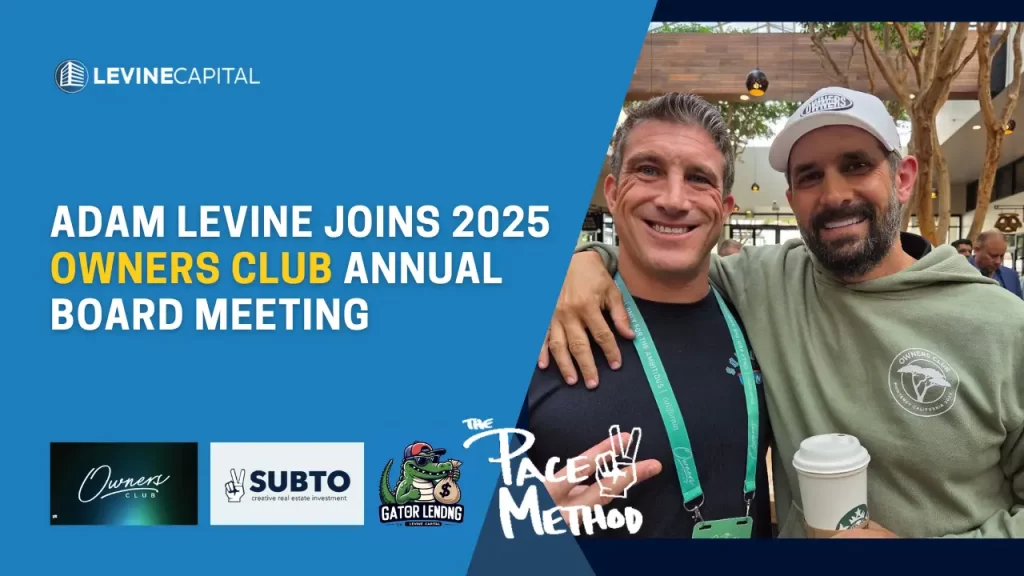
Sourcing the Capital & Community Expertise. Short on the down payment or the rehab reserve? We help identify where that capital comes from — private capital, a credit partner, a joint venture structure, or a gap-funding partner. Adam Levine is a proud member of Pace Morby’s Owners Club, SubTo, and Gator communities, and Levine Capital is staffed by Morby Method experts. That network is a functional advantage, providing direct access to operators, credit partners, private lenders, and creative structurers. When the missing piece is capital rather than credit, we know exactly where to look within the community.
The “Unicorn Realtor” for SubTo Deals. Need a property that fits a creative strategy? Greice Levine is our in-house “Unicorn Realtor,” specializing in sourcing SubTo deals specifically for homestead buyers and investors. Finding an agent who actually understands creative finance is one of the hardest parts of the business. Greice speaks the language, knows how to pitch the seller, and seamlessly coordinates with our lending side to ensure the deal crosses the finish line.
Navigating Seasoning. Seasoning requirements are one of the most common reasons a refinance stalls out. Different capital sources treat title seasoning, ownership seasoning, and rehab-completion seasoning very differently. Knowing which source has the shortest runway for your specific situation is often the entire difference between refinancing now and waiting six months with your capital locked up. We map that out before you are stuck, not after.
The Right Transaction Coordinator. Deals die in the details — missing documentation, an unresponsive title company, a scope of work that was never assembled correctly, a closing package that sits because nobody is chasing it. We help connect you with the right Transaction Coordinator (TC) to keep the file moving, ensuring your closing does not depend on you personally babysitting every party involved.
Creative Acquisitions & The Morby Method. Demand for subject-to and Morby Method financing has exploded, and with it a specific problem: creative acquisition structures confuse conventional lenders. You take a property subject-to, wrap it, or use seller carry — then discover your intended refinance lender has no idea how to underwrite what you just did.
Levine Capital is positioned as a premier DSCR-friendly Morby Method lender. We help investors acquire Morby Method deals by pairing creative seller financing on the front end with our specialized, DSCR-friendly lending products on the back end. Adam speaks both languages: the creative acquisition side and the institutional debt side. That is why Levine Capital has become widely recognized as a go-to lending partner for Pace Morby students and creative finance investors.
The question is never “do you qualify for our loan?” The question is “what does this deal actually need, and which capital source is right for it?”
The Real Lesson

If you strip the story down, this client’s twenty-one closings come from three fundamental shifts in strategy.
He stopped treating financing as a commodity. He found a lending partner who would strategize with him before he made offers, not after.
He gained optionality he never had to manage. Internal capital for speed, institutional backing for scale, and outside wholesale and correspondent channels for everything else — his deals were always routed to the best available source without him making a single extra phone call.
He found a partner who solved problems instead of declining them. Rural properties, seasoning windows, leverage that needed to flex, capital gaps, coordination breakdowns — none of it ended the conversation.
That is what having the right lender actually means. It is not just a rate. It is a relationship with a team whose job is to find the yes.
Bring Us Your Scenario
Whether it is a rural fix and flip, a short-term rental in a market other lenders will not touch, a subject-to takeout, a seasoning-constrained refinance, a credit partner structure, or simply figuring out which product your next deal actually calls for — that is the conversation we have every day.
Submit your scenario through Quick Quote. It takes five minutes, there is zero obligation, and you will receive an automated confirmation you can reply to with any additional detail. Once we have the numbers in front of us, we will review the deal and get on a call with real terms and a real strategy — not a generic rate quote.
For general questions or to start an application any time, our AI Loan Officer, Malli, is available on the site. For dedicated one-on-one strategy time with Adam, book through the Strategy Call page.
Levine Capital — Internal capital. Institutional backing. Wholesale and correspondent channels. Creative lending solutions.
Port St. Lucie, FL | loans@levinecapital.com | (772) 732-0757